

In this tutorial, you will learn how to remove your existing bathtub and install a new bathtub step by step.
You’ll learn how to remove your old alcove bathtub, how to choose a new bathtub, and how to hook up the plumbing and install your new bathtub WITHOUT having to access the plumbing from underneath.
Contents
- Video tutorial – How to replace a bathtub (above)
- Tools and materials needed
- Written tutorial
- How much can you save by doing it yourself?
- How long does it take to replace a bathtub?
Essential Equipment – Tools and Materials
The links below are affiliate links. I receive a small commission (at no additional cost to you) if you click on them and buy. This is a great zero-cost way to support his content. Thank you.
Materials Required:
- Bathtub (I used the Delta Classic 400 Tub in White)
- Bathtub Drain Assembly
- ABS Glue (for black pipe only)
- Additional plumbing fittings to attach to the house plumbing (as needed)
- Floor Leveling Compound
- DAP Kitchen, Bath, and Plumbing Silicone Sealant
- 1 5/8″ Pan Head screws
- Shims
Tools Required
- Tub Drain Remover
- Level
- 12″ Finishing Trowel
- Cordless Drill
- Caulking Gun
- Saw (Hacksaw, miter saw, or circular saw)
- Reciprocating Saw
- Drill Bits
How to Replace a Bathtub in 9 Easy Steps
Step #1 – Shopping for a new bathtub
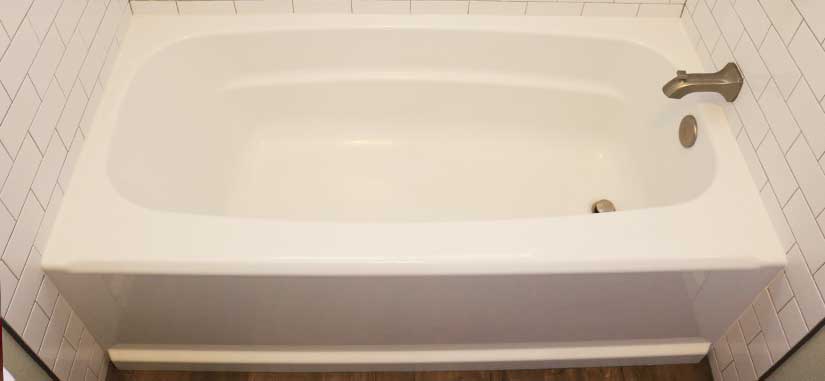 First, determine the style of bathtub you have. Is it a top-mounted bathtub, a free-standing bathtub, or an alcove bathtub?
Most tubs are alcove bathtubs (which sit between three walls with the entire front face showing).
Next, measure the width of your tub. The standard size of an alcove bathtub is 60″ long and either 30″ or 32″ wide. The height of the bathtub varies. There are other sizes, however.
Next, determine which side your drain is on. The last thing you want to do is order a tub with the drain on the wrong side.
Tips for choosing a new tub:
- Wider isn’t always better. It takes more water to fill, and unless you have a huge water heater, you won’t be able to fill up entirely with hot water.
- Deeper tubs (Taller) can be more challenging to install because they are harder to wiggle in place between the walls.
- Pay attention to the weight of your tub. Cast iron tubs can easily weigh 300 pounds and will often require a team of professionals to install. A single person can do plastic tubs.
- Read reviews and choose a quality tub; this isn’t something you’ll want to replace regularly.
Step #2 – Remove Your Existing Bathtub
To remove the bathtub, you first need to remove the tub surround or the tile around the bathtub. Unfortunately, you can’t remove a bathtub without doing this unless it is a freestanding bathtub.
Once the entire tub is exposed, you’ll find either nails or screws securing the tub flange to the wall studs. Remove those.
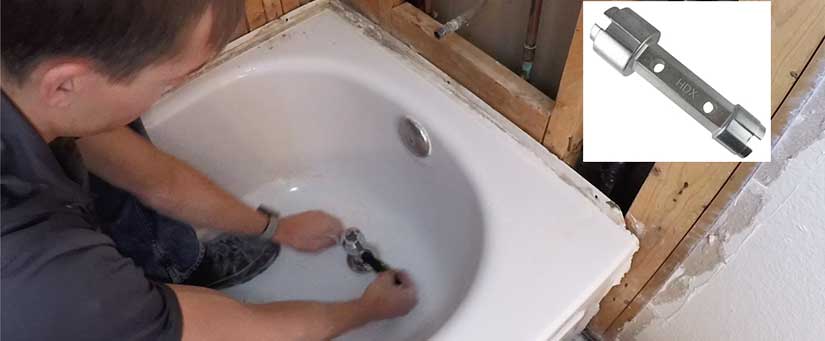 Next, disconnect the plumbing. Start by removing the drain stop (the thing that plugs the tub drain) by simply unscrewing it. Then, grab a tub drain remover (linked above), insert it into the drain, and twist it counterclockwise to disconnect it from the plumbing below the tub. You may need to insert a screwdriver for more leverage because these are often stuck in there pretty well.
Then, take a screwdriver and remove the cover plate from the overflow drain (the overflow drain is located right above the primary drain on the wall of the tub).
Next, remove the 2×4 stud on the side of the tub opposite the drain to which the side tub flange was attached (see the video for more clarity).
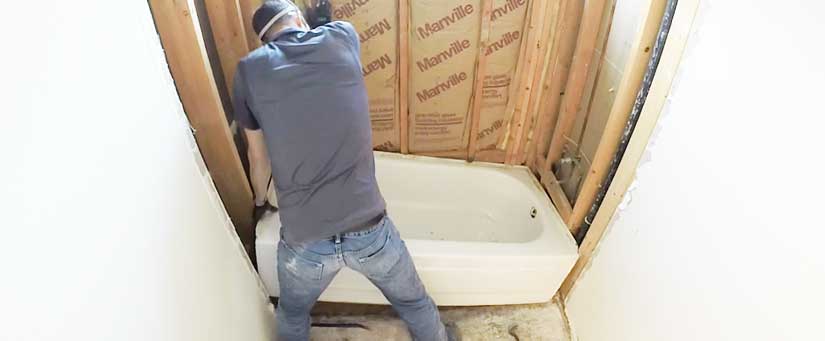 Finally, lift out the tub by lifting the side opposite the drain and then pulling the tub out at an angle. It might take some wiggling around, but you’ll get it.
Step #3 – Prep For the New Tub
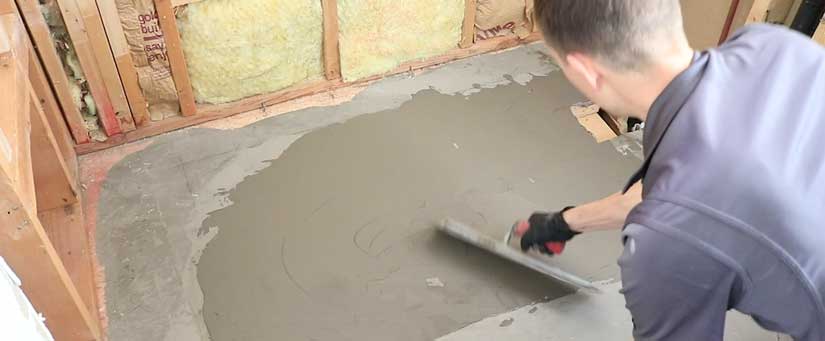 Bathtubs must be installed perfectly level on a solid, flat surface that evenly supports the bathtub’s weight. This is crucial since the tub will support hundreds of pounds of water and people.
If you’re installing a new acrylic or fiberglass tub, it will have a plastic base used to support the tub.
To ensure consistent support on the bottom of the tub, use a floor leveling compound such as the one listed above in the materials list to level the floor and make it as close to perfectly flat as possible.
If you’re installing a cast-iron tub, you don’t need to worry about leveling the floor, as you’ll be pouring a bed of mortar to support the tub. However, you will need to screw some 2x4s to the wall to support the tub’s rim. These 2x4s must be level and at the correct height so the front of the tub sits flush with the floor.
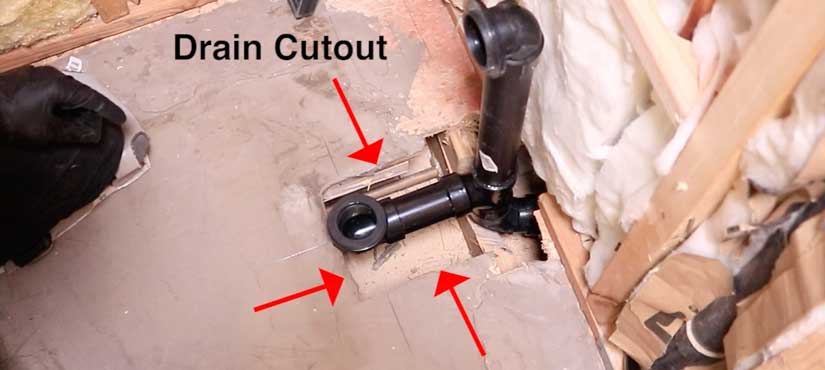 Once the floor is prepped, check the drain cutout in the floor and verify it’s the correct size according to the specifications that came with your new tub. If not, make any necessary cuts using a reciprocating saw.
Step #4 – Assemble the Bathtub Drain Assembly
This is the fun part, especially if you liked building LEGOs or models as a kid.
Lay the bathtub on its side so you can easily access the drain holes from the bottom and top of the tub.
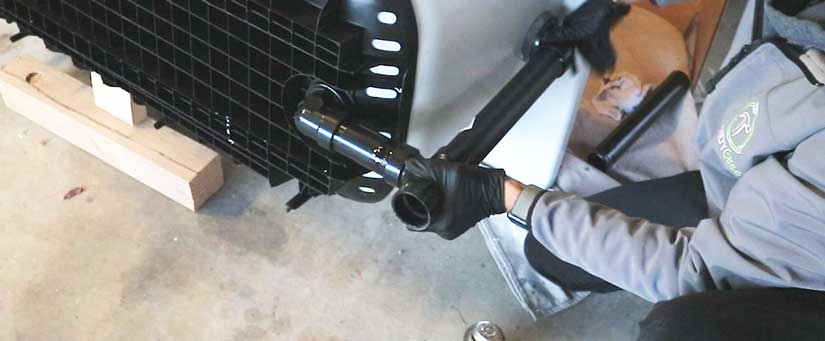 Then, take a drain assembly (which is sold in kits at most home stores) and start by attaching the drain and the overflow drain to the bathtub. When connecting the drain, the rubber gasket should be placed between the drain elbow and the bathtub (bottom of tub), NOT on the top side of the bathtub. Do not apply sealant to the drain yet, since this is a temporary connection.
Now that the drains are connected to the tub, cut the ABS pipes to the correct length using a miter saw and glue the drain assembly together using ABS glue. Ensure the T that connects the overflow drain to the primary drain is facing the proper direction to allow water to drain properly.
If you will have access to the plumbing connections after the tub is installed, you can go ahead and use sealant when connecting the plumbing fixtures.
However, if you won’t have easy access to the plumbing connections behind the tub once it is installed, remove the finished drain assembly from the bathtub for now.
Step #5 – Connect the Tub Drain Assembly To the House Plumbing
The key here is to align the drain assembly with where the bathtub will be before placing the bathtub.
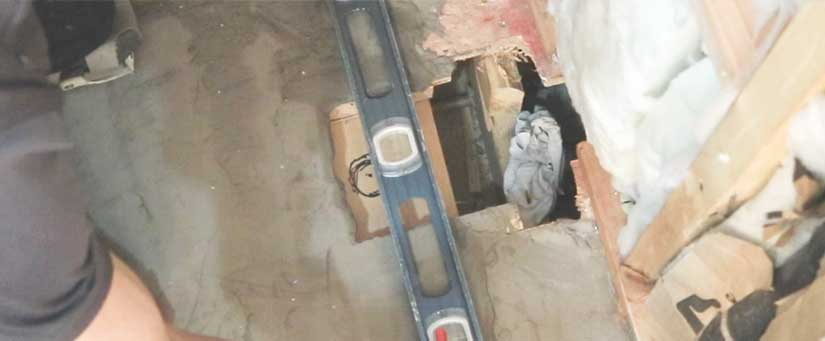 To do that, you’ll need to set the tub in place, mark the location of the drain on the floor or on a temporary piece of wood, and measure the distance between the floor and the bottom of the drain.
Basically, you need to know the exact location of the drain after the final installation. I demonstrate how to do this in the video at the top of this page. I highly recommend watching that because it needs to line up perfectly. Otherwise, it will be impossible to make a water-tight connection.
However, if you have easy access underneath the bathtub after installation, it will be easier to connect the drain assembly to the tub first, then install the tub and connect the plumbing to the house.
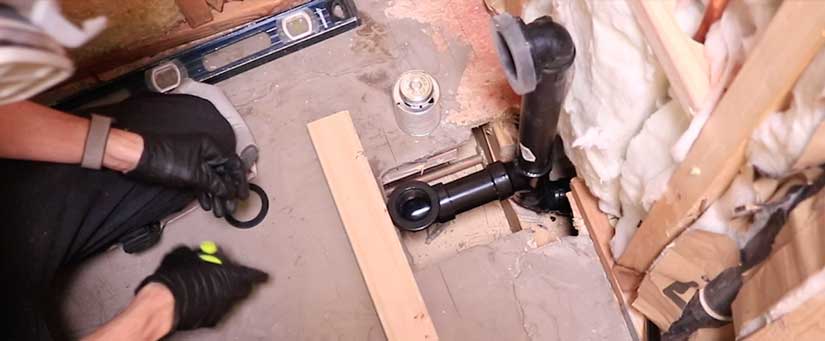 Once you’ve marked the location and height of where the drain needs to line up, glue the drain assembly to the P-trap, carefully ensuring it’s positioned just right. Take your time here.
Step #6 – Set the Bathtub
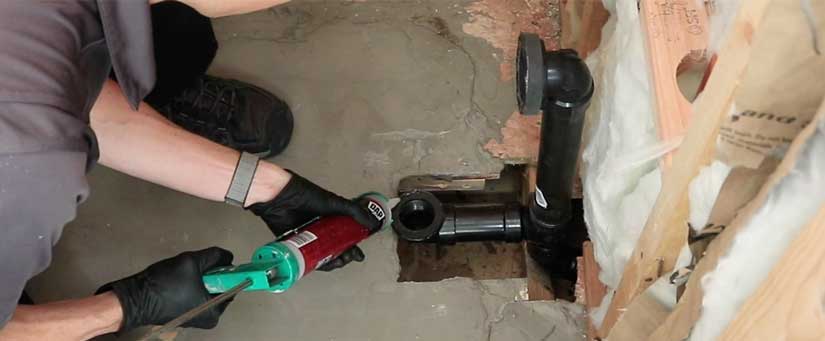 Now that the drain assembly is in place, apply silicone to both sides of each drain gasket and place it on top of the primary drain.
Then, slowly lower the bathtub into place, being careful not to smear the silicone sealant you put on the gasket. You don’t want sealant in the threads.
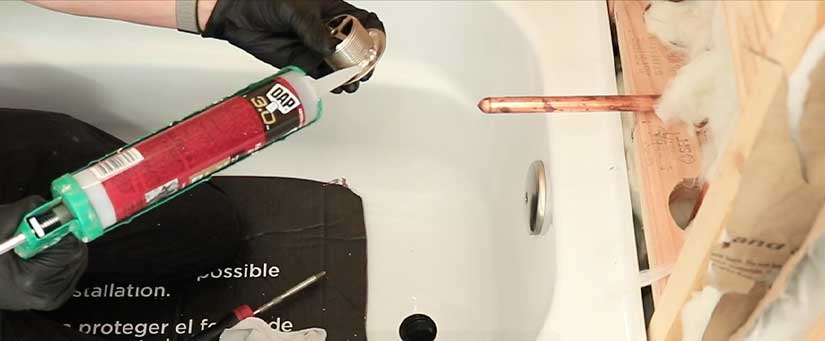 Then, put a large bead of silicone on the underside of the drain flange, and then screw in the drain to the threaded elbow of the drain. Wipe away the excess sealant once it’s nice and tight.
Then, put on the cover plate for the overflow drain and secure it. Wipe away any excess silicone before moving on.
Step #7 – Secure the Bathtub
Now that the tub is in place, reinstall the 2×4 stud that you removed earlier to remove the old tub.
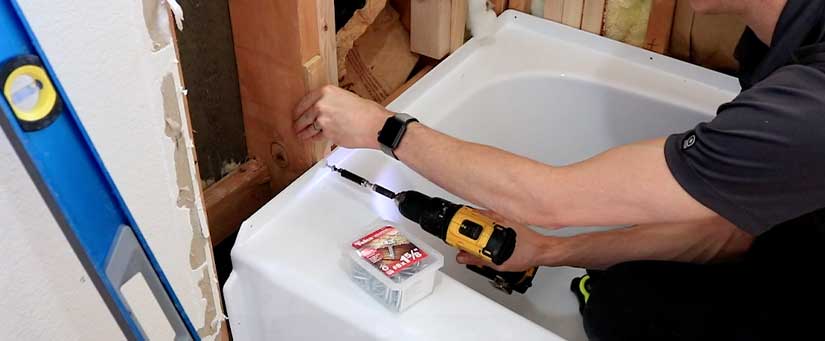 Then, using 1 5/8″ lathe screws, secure the bathtub to the walls – one screw at each stud location and two to three screws on the side tub flanges.
Pre-drill the screw holes in the tub using a 3/16″ drill bit before screwing in the tub to avoid cracking the tub.
And, use wood shims between the tub and the wall wherever there is a gap to avoid snapping the tub flange.
Step #8 – Test for leaks
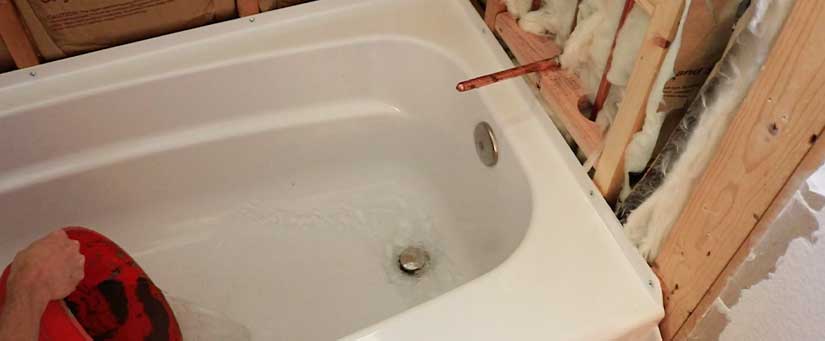 Before installing tile or any other finish material around the tub, verify the plumbing connections are solid and there are no leaks.
To do this, wait about 24 hours for the silicone sealant to set. Then fill the tub 1/4 full with water.
Shut off the water and any other sources of noise in the house, and listen carefully for leaks. If there is a leak, you’ll probably hear a faint dripping sound.
If the bathtub is on the second story, go down to the first floor and listen for leaks from below and look for any visible signs of water.
Step #9 – Caulk the Front Edge of the Tub
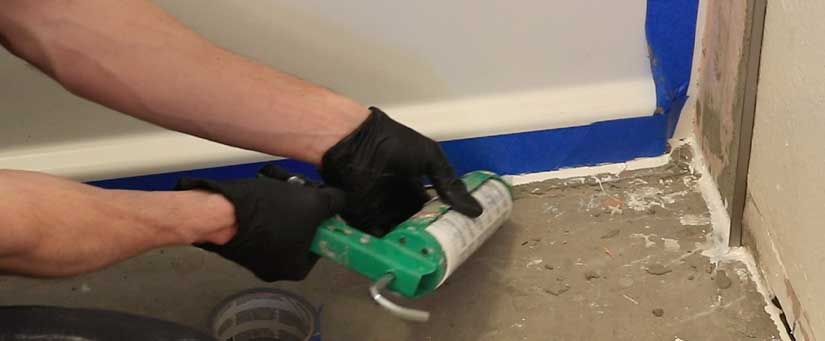 If there are no leaks, you’re almost done. Now, using a silicone sealant that matches the color of your tub, caulk the front edge of the bathtub where it meets the subfloor.
This will keep water that drips over the front edge of the tub from getting underneath the bathtub and causing mold growth.
And that’s it!
How much will you save by installing your bathtub yourself?
A BASIC bathtub installation by a professional typically costs between $1,000 and $2,000, but this doesn’t include modifications to the subfloor (such as leveling), demolition, the bathtub itself, or any additional costs that are almost inevitable.
In many cases, you may spend upwards of $10,000 to hire a contractor to perform this work, including plumbing and floor modifications.
So, at a minimum, you can save $1,000 doing it yourself, but that’s only for the rare and straightforward install. Most people can expect to save significantly more than that, likely $3,000 or more.
How long does it take to replace a bathtub?
Most DIYers can expect to spend 1 to 2 days replacing their bathtub. That’s about half a day to demo the old shower, half a day to level the floors, and a full day to connect the plumbing and install the new tub.
Once the tub is installed, wait 24 hours for the sealant to dry before testing for leaks in the plumbing.
Is replacing a bathtub doable for most DIYers?
As long as you are careful and methodical, you should be able to tackle this project. There is nothing about it that is difficult as long as you take your time and pay careful attention to what you’re doing.
The most challenging part is gluing the ABS plastic pipes together before the glue hardens and positioning the drain properly. And, if you mess that up, it’s inexpensive to replace the tub drain assembly.
The second most challenging part is leveling the floor so your tub doesn’t creak or crack later.
Then, of course, there is installing tile around your new tub, which I have a detailed tutorial to help you with right here.
Turn your DIY skills into a profitable side business and make over $100 per hour.

Home repairs and improvements are in high demand, and there aren’t enough service pros to fill that demand.
This is a massive opportunity for any handy person who enjoys helping people.
If this sounds interesting to you, I recommend reading this free report.
You’ll learn ten profitable services you can offer TODAY without a contractor’s license.
Then, I’ll send you more information about what it takes to build a profitable and enjoyable handyman business.
FREE REPORT: 10 Profitable Handyman Services You Can Offer WITHOUT a Contractor License





Great videos – love the detail. We need to replace a tubs with a new tub and surround. We want to hire someone but are having a ridiculous time trying to get companies to quote the job. We have been through 2 contractors that were both no shows and did not bother to call. I will not work with someone that cannot make a courtesy phone call. Here is my question and sorry for taking so long to get to it. We are located in northern IL – Lake County. Would you be able to make any recommendations on companies that would provide an estimate, show up and do a quality install/job? Thanks for anything you can do to help us out.
home advisor
Home advisor may work in large metropolitan areas but where I live in rural Maine, it’s next to useless as most local contractors either don’t have websites or aren’t even tracked by sites like home advisor or even search engines like google. Weird I know but true. I had the same problem with roofing contractors not showing up or returning calls(even the ones that were linked with home advisor).
Why do you use the Delta Classic 400 and what type of tube would you recommend? Thanks
I am curious… As I’m looking around it sounds like I should be putting plaster Paris under the tub, however I noticed that you didn’t on this particular bathtub. Is that because of the under support that is built into it? Or do I still need to use plaster Paris for this particular tub, however I noticed that you didn’t on this particular bathtub. Is that because of the under support that is built into it? Or do I still need to use plaster Paris for this particular better?
I watched your video on removing and installing a bathtub very helpful.
Do you do this and were are you located
I live in Sacramento California, I am looking for someone to remove a walkin tub and replace it with a regular tub. Is this something you do, or can you recommend someone? I would need an estimate.
Hi, I just watched your video on installing a bathtub and I wanted to thank you for making that job look far less intimidating than I first thought it would be. I have one question that is pretty lengthy. I had a tub given to me that I would like to install without having to replumb the entire thing. My problem is that my current tub is right drain and the new one is left drain. I was wondering if it would be a good Idea to raise my floor with a bit of 2×4 framing and subfloor and just extend the drain under the tub to the original pipe on the right side. You see, my house is very old and all of the main piping is old black pipe. Replacing all of that myself seems to be a really daunting job and so I though if I could apply my idea of extending the drain under the tub to the main pipe could save me a lot of time, hard work, and money. I am sort of on a budget otherwise I would just hire someone. Thank you in advance for any advice you can provide me.
I would find a tub that is made the space. Doing a job like this is a sure sign of DIY, which is not helpful when reselling your house. Not only that, you’ll likely run into issues.
I loved your video and almost attempted to replace a fiber glass enclosure, to a regular bathtub. Is this something you do as a profession and what would be the cost, also where are you located. You seem to do so much more than I have seen in other videos. I am in a condo and don’t need any leaks on my neighbor. Thanks in advance.
I got the tub you used and am trying to find the proper bathtub drain assembly. I clicked on the link you have but it just takes me to Amazon but doesn’t specify one in particular. The specs for the tub say I need Drain and Overflow assembly (fits a 16-1/2” deep bathtub and 13 7/8” Drain to Overflow).
Most of them will fit; make sure to find the correct pipe diameter and check with the tub manufacturer directions (some Kohler tubs require special drains.)
After removing the tub the old drain assembly is intact and attached to the plumbing is it possible to reuse it? If not where and how to do I detach the old assembly?
It probably won’t line up with the new tub, so no, you probably can’t use it. Since the joints are glued together for the drain pipe, try to detach it somewhere that gives you the ability to easily attach the rest of the assembly. You want to leave about an inch of clean pipe to glue the new assembly to.